Finally, I have some time to cover one of my ideas I wanted to cover for quite a long time. Today I want to present a new topic which is GitHub Rising Stars – Java, and Rust repositories which collected the highest number of stars on Github. The number of stars there is not absolute, but relative showing stars grow for the last month in comparison with the total number of stars for the particular repository.
All information collected from GitHub trending page on the May 2.
About the project: Apache DolphinScheduler is a distributed and extensible workflow scheduler platform with powerful DAG visual interfaces, dedicated to solving complex job dependencies in the data pipeline and providing various types of jobs available “out of the box”.
About the project: Apache Hudi stands for Hadoop Upserts Deletes and Incrementals. Hudi manages the storage of large analytical datasets on DFS (Cloud stores, HDFS or any Hadoop FileSystem compatible storage).
About the project: OWASP dependency-check is a software composition analysis utility that detects publicly disclosed vulnerabilities in application dependencies.
About the project: The Solana Program Library (SPL) is a collection of on-chain programs targeting the Sealevel parallel runtime. These programs are tested against Solana’s implementation of Sealevel, solana-runtime, and deployed to its mainnet.
About the project: simple graphical user interface for Neovim. Where possible there are some graphical improvements, but it should act functionally like the terminal UI.
About the project: Real-Time Data Processing & Analytics DBMS with Cloud-Native Architecture written in Rust, inspired by ClickHouse and powered by arrow-rs, built to make it easy to power the Data Cloud.
This is my first article about the Rust programming language, so I wanted to make it a little bit funny and interesting at the same time.
There are lots of great technical articles about Rust, but today we will talk about the keywords defined in Rust and languages that influenced the Rust creation.
Following Wikipedia there are languages that influenced Rust the most.
Rust was influenced by
Alef,C#, C++, Cyclone, Erlang, Haskell, Limbo, Newsqueak, OCaml, Ruby, Scheme, Standard ML, Swift
So, idea is to compare keywords defined in Rust with the keywords defined in “parent” languages and see the match rate and figure out the most “valuable” language. If you are interested you can find all keywords by languages mentioned in the article below.
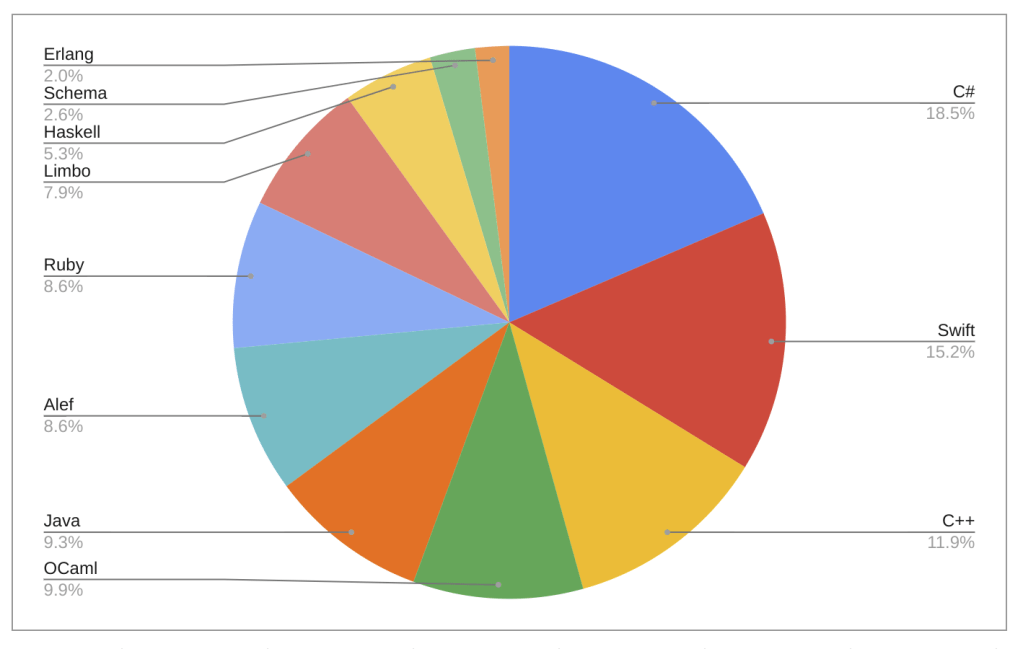
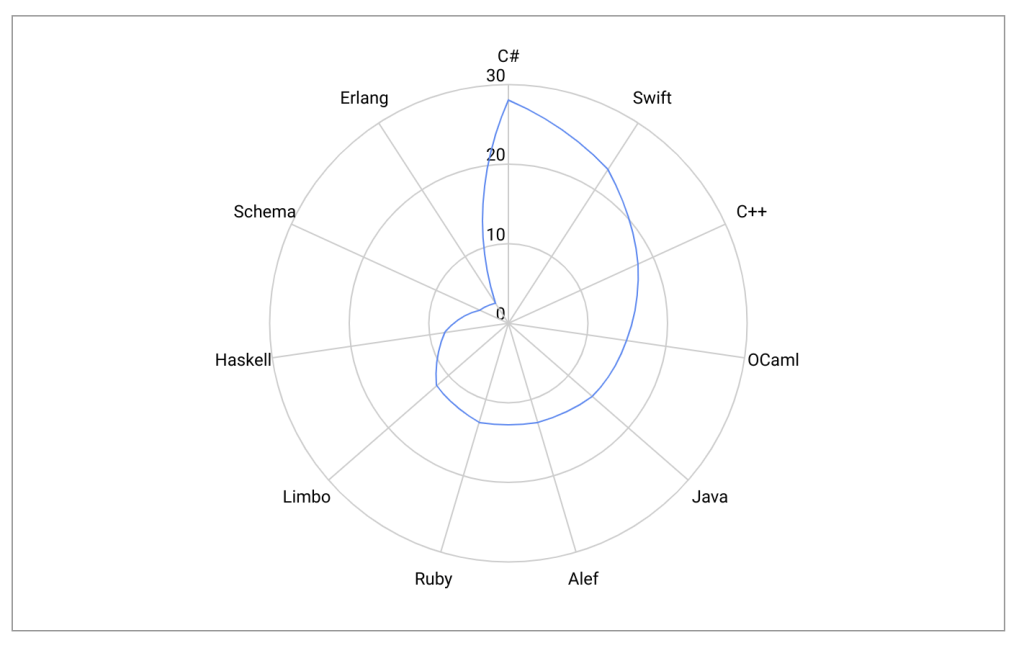
All comparison result represents in the table, but we can make them more visual.
Keywords comparison table
“Parents” pie chart
“Parents” radar chart
As Java developer I had to include Java in comparison as well, so here we go.
“Parents” pie chart + Java
“Parents” radar chart + Java
Based on chart above and some observations gathered during comparison there are some fun facts:
C# and Swift most influences on Rust development and most critical “parents” of this language.
Erlang is still an important but less valuable “parent” for the Rust.
Rust’s keywords “self” and “Self” must be coming from Swift as this pair presents only there when “self” itself could be found in Swift, Ruby, and Limbo.
Even if Java and Rust share some common pieces there is not influence Java on Rust creation and development
There is no “goto” in Rust which everybody should avoid in Alef, C#, C++, Java.
Rust doesn’t have “new” present in C#, C++, OCaml, Java.
There is no “this” and “void” in Rust which you know by C#, C++, and Java
Rust’s “fn” highly possible goes from Limbo because only Limbo has the same keyword.
Rust’s “macro” must be going from Schema when “match” and “mod’ from OCaml.
Cyclone, Newsqueak, Standard ML are missed in analysis because it is quite difficult to find keywords for them.


 Software Engineering Blog